Maldives
Maldives
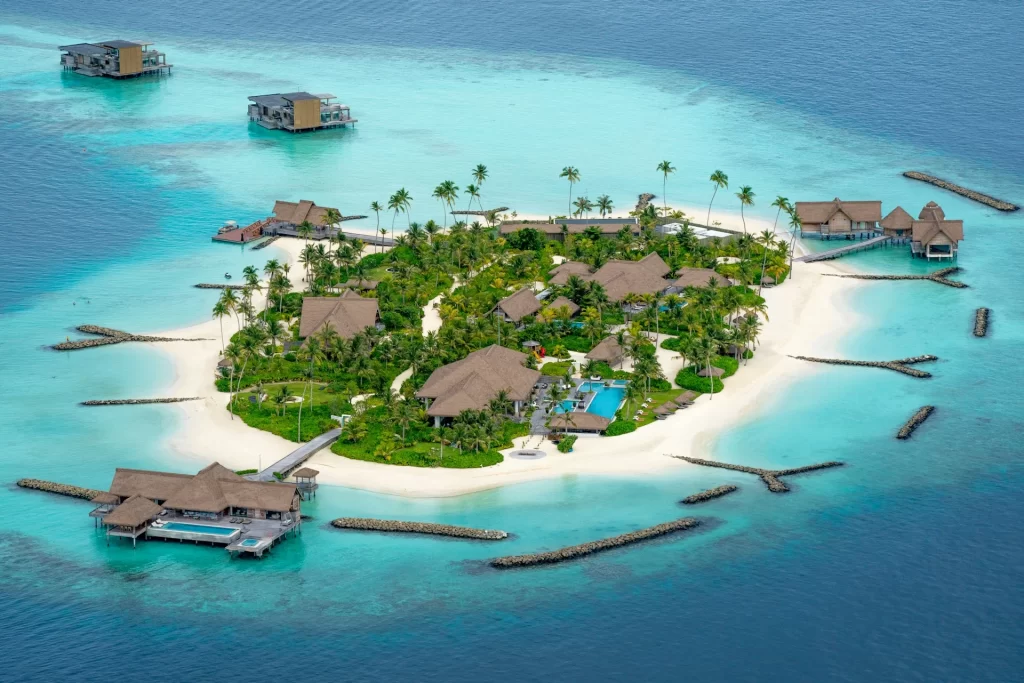
The Maldives is a vision of pure tropical enchantment — a scattering of coral atolls adrift in the Indian Ocean, where turquoise lagoons cradle overwater villas and palm-fringed islands. While most visitors arrive for a fleeting holiday, a small but growing number of expats and retirees are discovering the quieter side of paradise: tranquil island communities, vibrant marine life, and an unhurried rhythm of life. Beyond its famed resorts lies a nation of proud heritage and environmental consciousness, where the beauty of the sea is both livelihood and identity. Life in the Maldives offers simplicity with sophistication, best suited for those who value serenity and connection to nature above the bustle of urban living.
Expat Details
COASTAL HIGHLIGHTS — POPULAR AREAS FOR EXPATS AND RETIREES
- Malé: The capital and commercial center — busy but convenient.
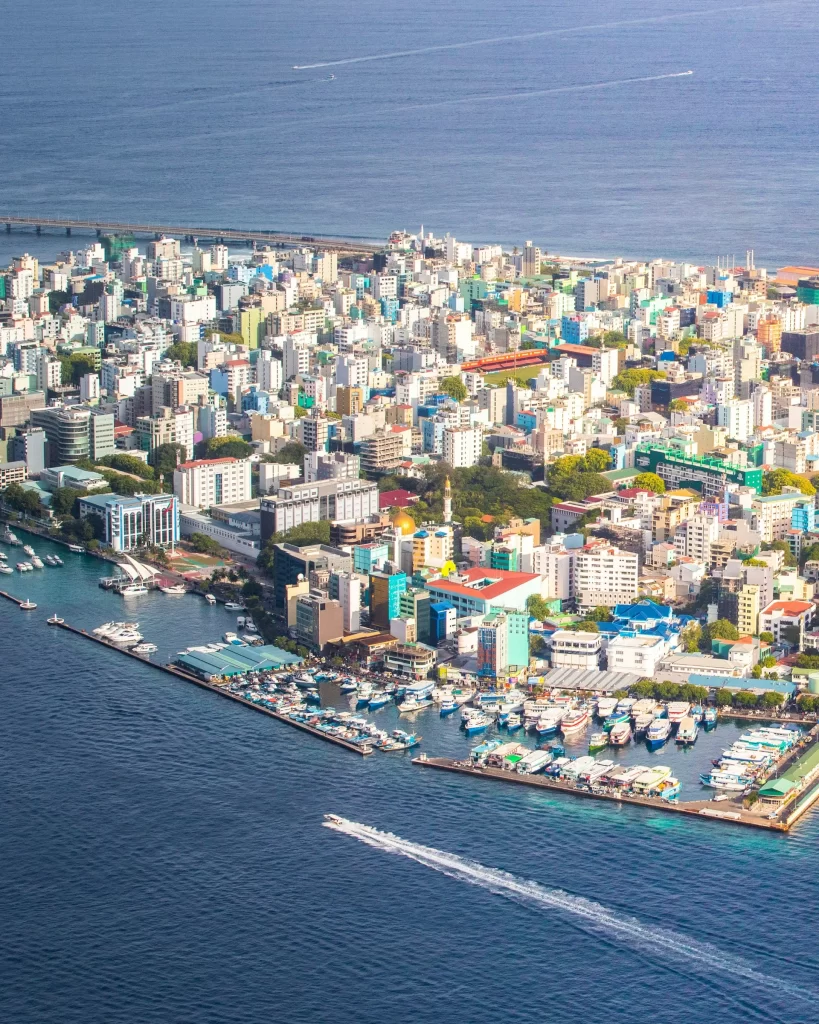
- Hulhumalé: A planned island city near the airport; modern housing and strong infrastructure.
- Maafushi & Thulusdhoo: Local islands offering affordable guesthouses and community living.
- Ari & Baa Atolls: Home to eco-resorts and private residential projects for investors.
- Addu Atoll: Southernmost atoll, offering a slower pace and developing expat community.
Review
Life in the Maldives is a balance between breathtaking beauty and practical simplicity. Its rhythm is dictated by tides and sunlight, and its rewards lie in serenity, safety, and the ocean’s endless horizon. While infrastructure and costs demand adaptation, few places offer such daily intimacy with nature. For those seeking a secluded, sunlit existence where modern comfort meets timeless calm, the Maldives remains one of the world’s purest expressions of island living.
Cost of Living
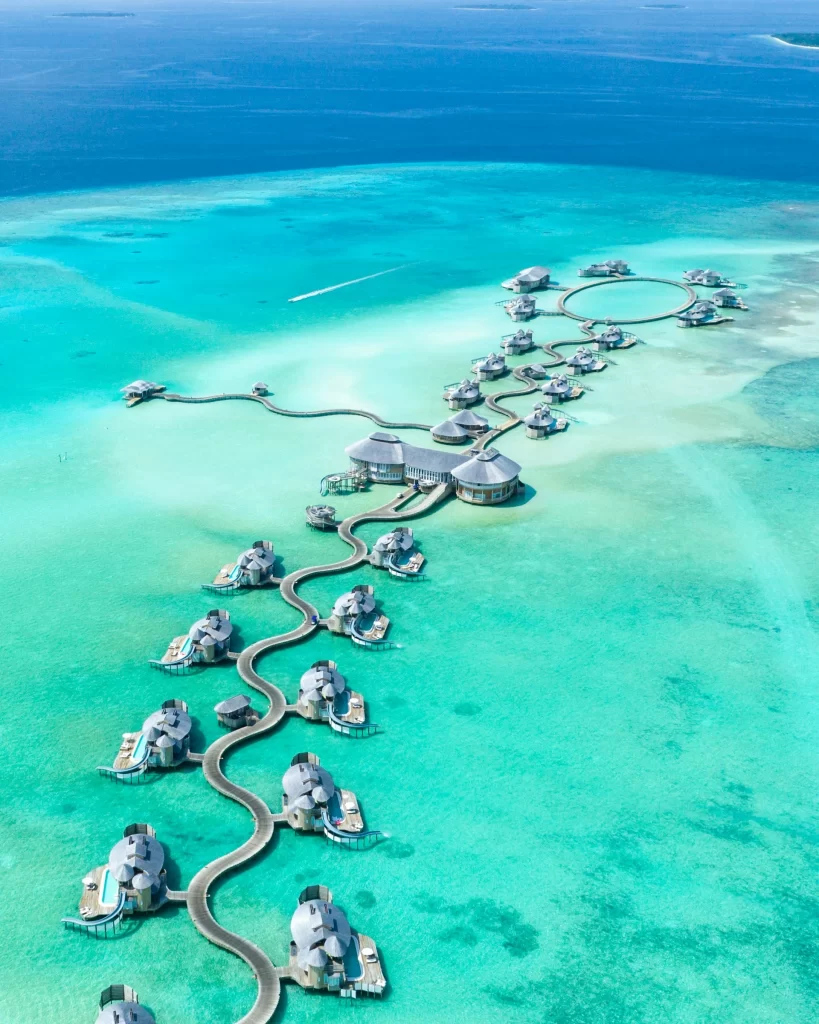
Living in the Maldives can be surprisingly variable in cost — luxury resort life carries a premium, while residing on local islands can be relatively affordable. Imported goods are expensive due to the country’s isolation, but locally caught fish, coconuts, and tropical produce offset daily expenses.
Cost of Living
Cost of Living in Popular Expat Locations in the Maldives
Malé and Hulhumalé
The capital and its reclaimed twin island form the center of urban life.
- Housing: One-bedroom apartments range $800–$1,500 per month; larger or sea-view units $1,800–$3,000+.
- Food: Groceries cost $400–$700/month; imported goods are significantly more expensive than local fish and produce.
- Utilities & Internet: Electricity and water $100–$250/month; fiber internet $50–$100.
- Transport: Local ferries and speedboats connect to nearby islands; most residents do not own cars.
Maafushi and Local Islands
Popular among remote workers and budget expats.
- Housing: Guesthouse rentals $600–$1,000/month; simple apartments $400–$700.
- Food: Local meals cost $5–$10, imported goods limited.
- Lifestyle: Calm, community-focused, perfect for minimalists or digital nomads.
Resort Islands (for Resident Employees and Investors)
Resort staff accommodation is often included in employment packages. For investors or resident managers:
- Housing: Private staff villas or luxury residences $1,500–$3,000+ monthly.
- Utilities: Often included in contracts; otherwise $150–$300 monthly.
- Access: Travel to Malé typically by seaplane or scheduled speedboat.
Quality of life
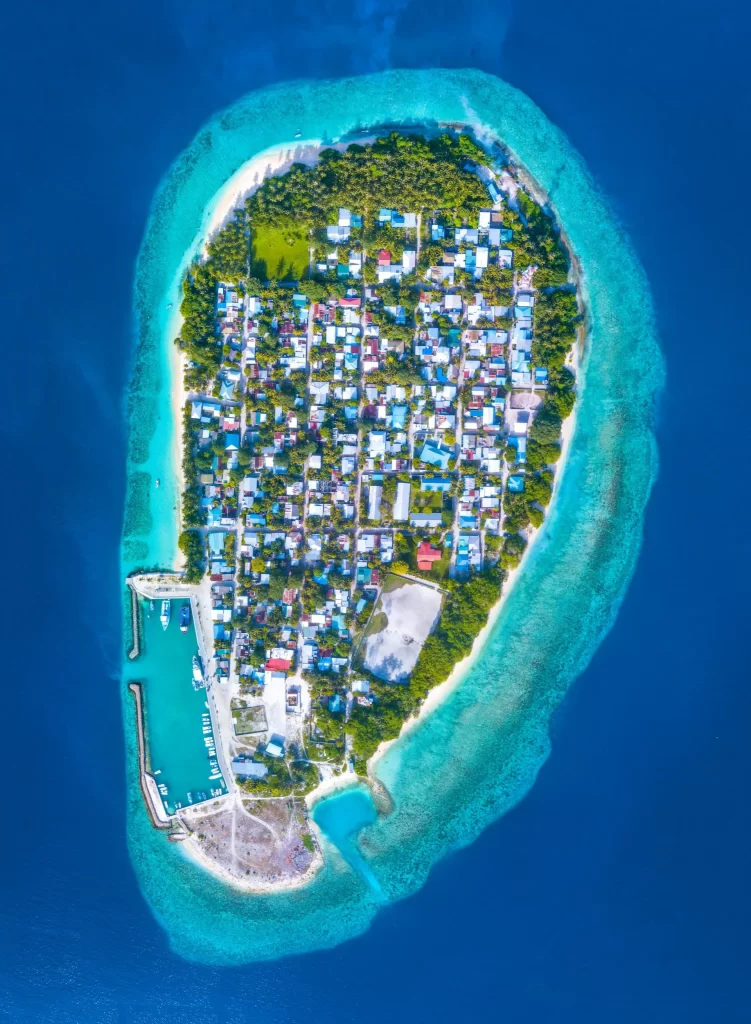
The Maldives promises an extraordinary quality of life for those who embrace isolation and ocean living. Clean air, gentle seas, and a deeply respectful culture shape daily experience. However, the small land area and limited social opportunities make it ideal for couples, retirees, or remote professionals seeking peace rather than nightlife.
Quality of Life
Life as a Resident Expat
Life in the Maldives centers around the ocean — peaceful, slow-paced, and intimately tied to nature. While many foreigners live on resort islands due to employment or business, a growing number now reside in Malé, Hulhumalé, or local residential islands with expanding infrastructure, schools, and services.
English is widely spoken, particularly in hospitality and commerce, making integration simple. The pace of life is relaxed, crime is low, and communities are tight-knit. However, the country’s geographic isolation and limited land area make logistics and imports relatively costly.
The Maldives offers one of the safest, cleanest, and most peaceful lifestyles in the Indian Ocean.
- Safety: Extremely low crime rate; expatriates enjoy a high level of personal security.
- Infrastructure: Reliable electricity and water in urban islands; outer islands may have periodic outages.
- Connectivity: Nationwide 4G coverage and expanding fiber internet.
- Education: International and private schools available in Malé and Hulhumalé, often following British curricula.
- Transportation: Efficient ferry network, seaplanes, and domestic flights connect major atolls.
Pros & Cons
The Maldives offers unmatched natural beauty and tranquility, but its small size and limited infrastructure can challenge long-term convenience.
Pros & Cons
Pros
- Year-round warm weather and crystal-clear waters.
- Friendly, English-speaking population.
- Exceptional diving and marine environment.
- Safe, politically stable, and environmentally aware.
Cons
- High import costs and limited goods.
- Healthcare and schooling options limited outside Malé.
- Alcohol restricted to resorts.
- Geographic isolation — transport between islands can be costly.
Residency & Visas
The Maldives maintains a selective but welcoming immigration system, balancing environmental preservation with controlled foreign residence. Long-term living is possible for investors, retirees, and professionals under specific categories managed by the Maldives Immigration Department and the Economic Ministry.
Residency & Visas
Short-Stay and Tourist Visas
Citizens of most countries receive a 30-day visa on arrival free of charge, extendable up to 90 days upon request. Visitors must show valid return tickets, accommodation booking, and proof of funds.
Residency Options
- Work Visa (Employment Residence):
The most common pathway for expatriates employed in tourism, construction, education, or healthcare. Employers handle sponsorship and renewals annually. - Business and Investor Residency:
Foreigners investing in Maldivian enterprises or developing resorts can obtain renewable residency permits tied to their business ventures. Minimum investment amounts depend on the sector and project scale. - Corporate Resident Visa:
Granted to investors contributing at least USD 250,000 in a registered Maldivian business, offering residency validity of 5 years, renewable. - Retirement or Long-Stay Visas:
Introduced under the Maldives Retirement Residence Program, this visa caters to foreigners aged 65 and older with steady income and health insurance. Applicants must deposit at least USD 250,000 in a Maldivian bank and maintain a local lease. - Real Estate Linked Residency:
Non-citizens cannot purchase land outright, but under government-approved Integrated Tourism Resort Projects, foreign investors may lease property (often 50–99 years) with residency benefits for the duration.
Permanent Residency and Citizenship
There is no formal permanent residency or naturalization path for foreigners in the Maldives. Citizenship is not attainable through long-term stay or investment, preserving the nation’s demographic balance. Most expatriates live on renewable work or investor visas.
Healthcare
Healthcare in the Maldives is basic but improving, with solid primary care on Malé and limited facilities on other islands. Private clinics are modern, but for advanced treatment, expats typically travel to Sri Lanka, India, or Singapore.
Healthcare
- Public Healthcare: Basic services are free or affordable for residents, including expats on long-term visas.
- Private Clinics: Offer higher-quality care with shorter wait times; international standards vary.
- Hospitals: ADK Hospital and Tree Top Hospital in Malé provide comprehensive services.
- Medical Insurance: Strongly advised, covering emergency evacuation to Sri Lanka, India, or Singapore for specialized treatment.
- Emergency Care: Reliable in Malé; limited on outer islands.
Safety & Security
The Maldives is among the safest nations in Asia. Crime is rare, and violent incidents are virtually unknown. Natural risks are minimal aside from occasional heavy monsoon weather.
Safety & Security
SAFETY & SECURITY
- Crime: Low overall; petty theft is the main concern in urban areas.
- Community: Respectful and law-abiding.
- Natural Hazards: Seasonal storms; no major cyclone threats.
- Political Stability: Generally stable with steady governance.
- Environment: Excellent disaster preparedness for its size.
Climate
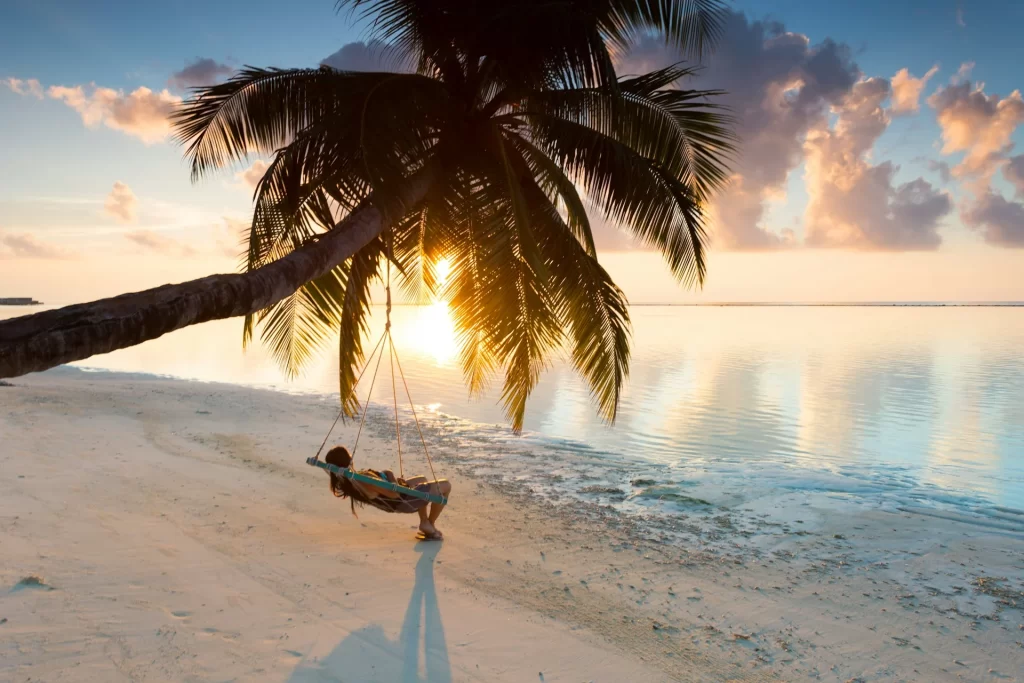
The Maldives enjoys a uniformly warm tropical climate moderated by the Indian Ocean. Sunshine dominates year-round, tempered by two distinct monsoon seasons. Sea breezes keep temperatures comfortable, and humidity is consistently high.
Climate
- Average Highs: 30–32°C (86–90°F).
- Average Lows: 25–27°C (77–81°F).
- Dry Season: December to April (northeast monsoon) — calm seas and sunny skies.
- Wet Season: May to November (southwest monsoon) — brief but intense showers.
- Humidity: 70–85%, balanced by ocean winds.
- Best Months: February to April for diving and calm waters.
Infrastructure & Amenities
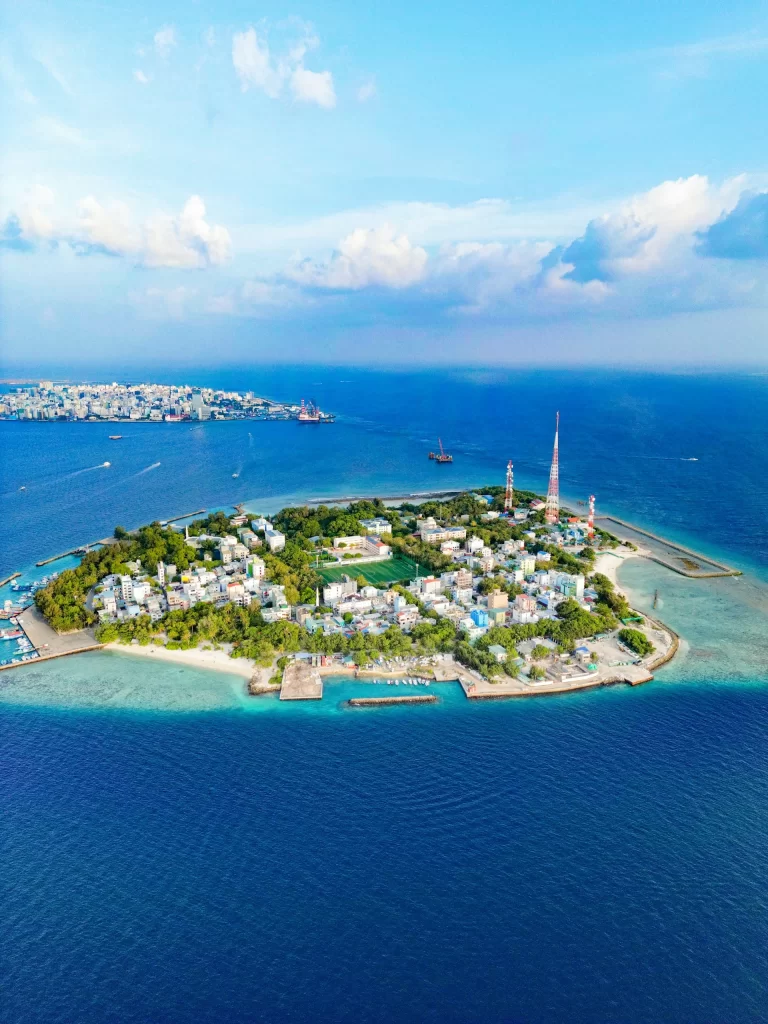
Maldives’ infrastructure reflects its geography: compact, dispersed, and increasingly sustainable. The capital, Malé, houses modern facilities, while inhabited islands rely on efficient ferry systems, renewable energy, and digital connectivity.
Infrastructure & Amenities
- Transport: Regular ferries, speedboats, and domestic flights connect islands.
- Utilities: Reliable power and water in urban areas; solar energy growing nationwide.
- Internet: High-speed connections in Malé and resort islands; 4G available countrywide.
- Banking: Stable and international; foreign accounts permitted.
- Education: English-taught private and international schools on Malé.
General:
Location:
Indian Ocean
Sovereignty:
Independent
Capital:
Malé
Population:
529,676
Land Area (km2):
298
Population Density (km2):
1,766
Language:
Dhivehi
Literacy %:
97.9
Poverty %:
2.2
Currency:
Maldivian Rufiyaa (Rf)
Indices:
GDP +/- Growth %:
+5.1
World IHDI Score:
0.602 (88/192)
World Gini Score:
29.3
Indices Detail
GDP +/- Growth % measures the annual growth rate of the country’s GDP.
World IHDI Score (Inequality-adjusted Human Development Index) reflects average achievements in health, education, and income, adjusted for inequality.
Country Rank (#/192) (1 = best for both scores)
World Gini Score is a measure of income inequality; 0 represents perfect equality and 100 maximal inequality.